Can't personalize beyond basic email and SMS
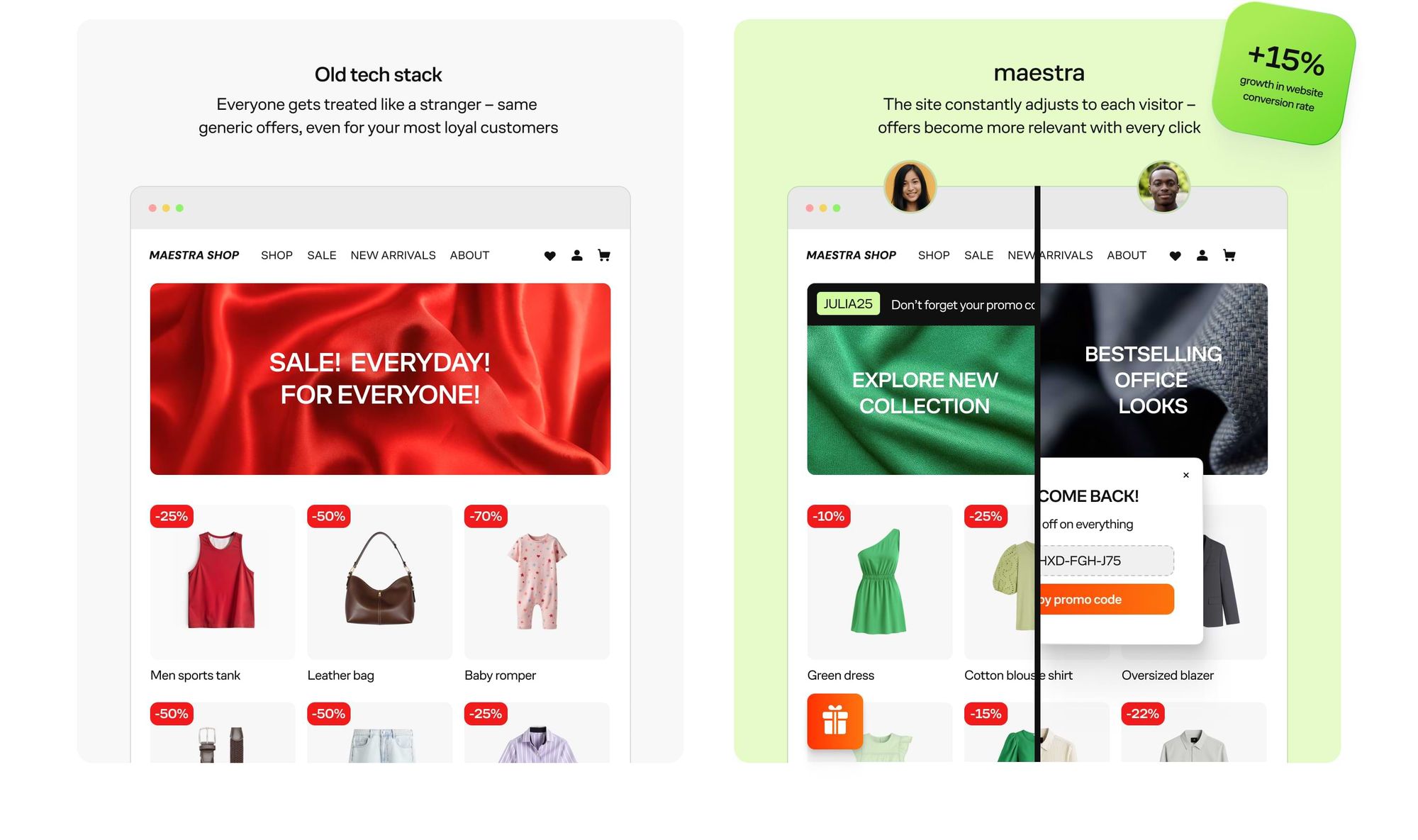
The homepage is your most-visited page and your least personal one
Maestra Platform personalizes the site off the same profile as the email, an all-in-one retention marketing platform for ecommerce brands, configured by a forward-deployed marketer.
+56.6%
growth in online revenue year over year after switching from Klaviyo
Brands running on Maestra






The problem
Every fix needs a developer or another app
Teams that want dynamic content usually end up stacking third-party apps on top of their storefront, each with its own setup, its own bugs, and its own limits on what data it can use. Attempts to bolt on personalization this way tend to stall or break rather than ship.
What we hear from brands
website conversion and AOV growth targets remained out of reach because attempts to integrate third-party recommendation apps failed, according to a brand then on Klaviyo
large catalog discovery struggles because the website is static and needs dynamic, rider-specific experiences, according to a bike-components brand
current onsite tools feel too pushy and are not driving enough conversions, according to a heritage jewelry brand
The new way
Give every visitor stage its own logic
New visitors see bestsellers that reassure them they are in the right store. Someone who has browsed sees similar-to-viewed items. A first-time buyer sees post-purchase picks. A repeat buyer sees personal recommendations built on their own history. One system, four distinct experiences, running automatically as the customer moves between stages.
Outcomes brands report
+111.7%
growth in online order volume year over year after switching from Klaviyo
From a published case study49.3%
of active contributors read personalized impact reports, twice the rate of regular emails
From a published case studyCustomer proof
Unidragon found a revenue line inside customers it already had

Shoppers who bought one puzzle were never told about the rest of the range. A cross-sell flow built off what they actually own now produces a measurable share of the company's revenue.
 Read the full case study
7.4%
of total revenue generated through a simple cross-sell flow
How it works
What gets rebuilt before you go live
Data and integrations
Customer records, order history, and the connections to your store move first, so the profiles are whole before anything sends.
Deliverability
Domains, sender signatures, and Postmaster are set up and monitored, because a migration that lands in spam is not a migration.
Flows and campaigns
The programs you run today are rebuilt and the ones you never had time for get launched alongside them.
The platform
Where the customer profile actually comes from
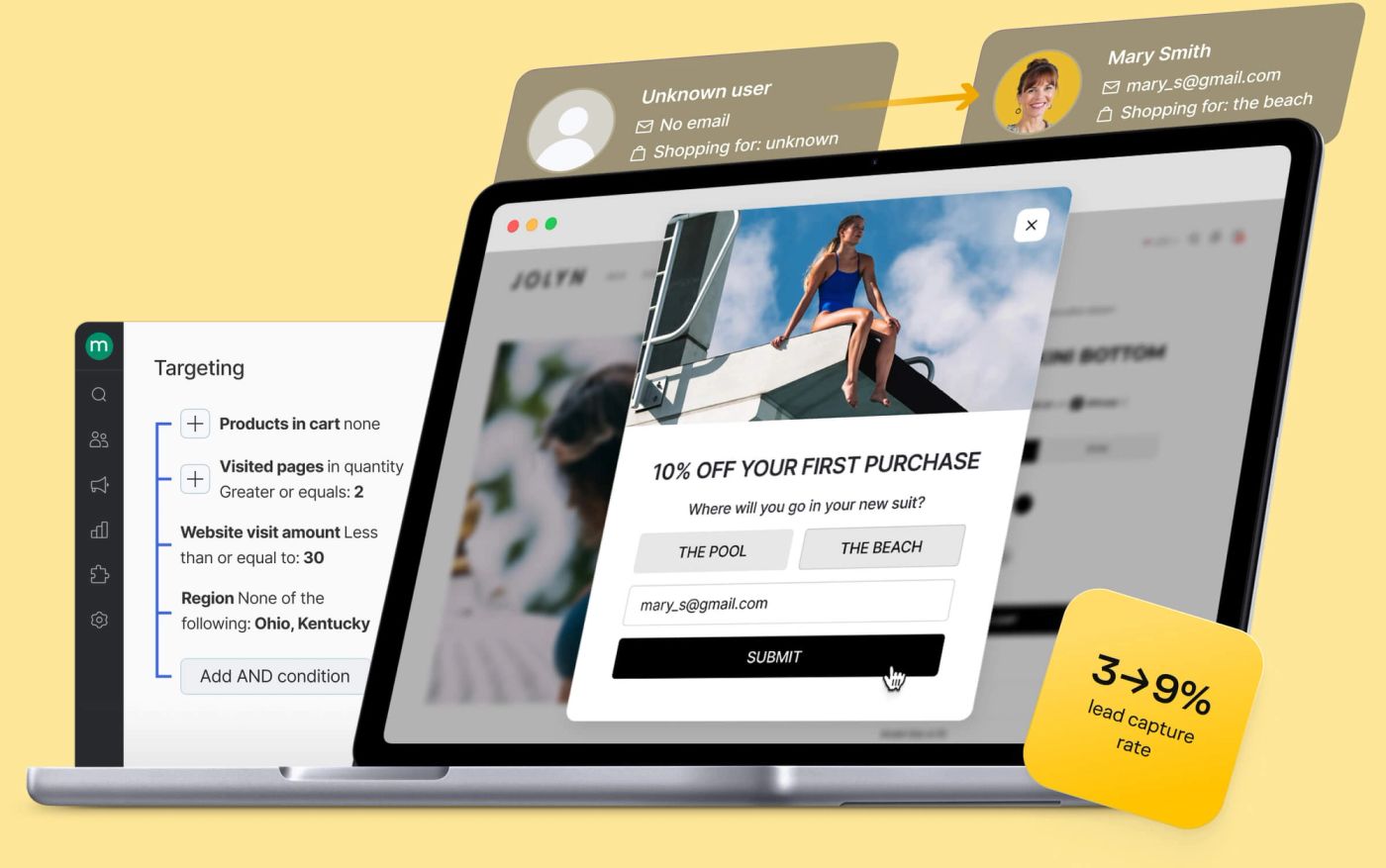
Store events, order data, campaign response, and site behavior write into the same record, with cleansing and error monitoring built in rather than bolted on afterwards.
Including
Your forward-deployed marketer
The account load is the whole trick
Attentive service depends less on goodwill than on arithmetic. A Maestra marketer carries fewer than 15 accounts where 60 or more is normal elsewhere, which is what makes a 5-minute response and four strategy meetings a month something you can plan around.
Fewer than 15 accounts per marketer, versus 60+ industry-wide
5-minute response time versus 72 hours elsewhere
4 strategy meetings a month instead of 1
Replace your stack
The tools most brands switch off first
Email and SMS usually move first because the pain is loudest there, then recommendations and lead capture follow once the profiles are already unified. Loyalty tends to be last and benefits most.
Replaces
Sendlane
Optimizely
Wisepops
Yotpo
Zapier
Read the cases before you read a pitch
The brands on the site describe what they switched from and what changed afterwards, in their own numbers.